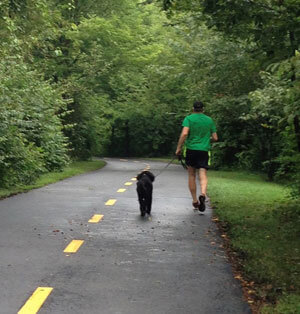
 Dogs can be the most fun, reliable and enthusiastic training partner a runner could ask for, but not all dogs are created equal for running. Here are some tips for running with your dog.
Choose the Right Breed: Labs, cattle dogs, pits, boxers, pointers, huskies, retrievers, setters, shepherds, standard poodles, vizslas, border collies, weimaraners, and Rhodesian ridgebacks are listed among the best running partners by Outside Magazine. If yours is a mixed breed and he has one or two of these breeds in his blood, he might be good to go. Make sure that your dog is at least 18 months old before beginning a running program and/or check with your vet to make sure this is the best thing for your pup.
Choose the Right Conditions: Dogs love to run and don’t complain, but there are some conditions that are not good for certain types of dogs. Hot conditions may be more of a problem for a thick-coated dog, such as a husky or malamute, or for boxers, whose squishy faces might cause them breathing problems. If your dog is a toy or very small breed, stick to shorter distances or brisk walks. Likewise if you have a giant breed dog, due to a tendency toward hip displaysia.
Train Your Dog Like You Train Yourself: You wouldn’t just lace up and go run 10 miles, all out, with no training, so don’t do that to your dog. They need to work up to longer distances and faster sustained paces, just like humans, to avoid injury. There are run training programs available for dogs. Search one out, or use the 10% rule that new runners use for working up to goal distances.
Be Patient With Your Dog: Dogs love to run and chase and are not steady, predictable runners at first, so be patient. If your dog is already leash-trained and well socialized, you’re ready to proceed with caution. When you’re learning to run together, avoid a taut leash. It should be long enough to hang loose, but not trip you, about three feet from you is about right. Gentle correction and lots of positive reinforcement will help you and your dog on this journey together.
Choose The Right Leash: Many runners prefer a hands-free leash that ties at your waist. You and your dog need to find what’s comfortable for you. However, in general, avoid retractable leashes, because they can tangle, allow your dog to bolt or run too far away from you, and they have been known to cause injury to dog and owner. Speak to a pet store professional about running leash options or look online. (Be sure to read the reviews.)
“Listen” to Your Dog: Your dog can’t tell you when he’s tired or in pain, so pay attention to his body language. Is he panting excessively? Does his breathing not slow down when you stop? Is he stiff or limping during or after the run? Is he slowing down or stopping? All of these are signs that your dog may have overexerted and it’s time to take him home.
Take Care of His Feet: Regularly check your dogs paws for injuries or wear. During winter months, make sure his paws are clear of snow and salt when you come back inside. Consider booties or pad protecting balm, which can also protect paws during the winter months. Bonus: You may find the booties highly entertaining when your dog first wears them.
Nutrition and Hydration: Avoid feeding your dog an hour before/after running, due to a risk for bloat or gastric torsion. Make sure that your dog, just like you, stays hydrated during the run. Experts suggest taking a water break every 10 minutes, at first, until you figure out how much your dog will need during the run. Carry a portable canvas bowl or stick to a route that has a dog water fountain.
This article was compiled from a variety of running sources as well as staff experience.